
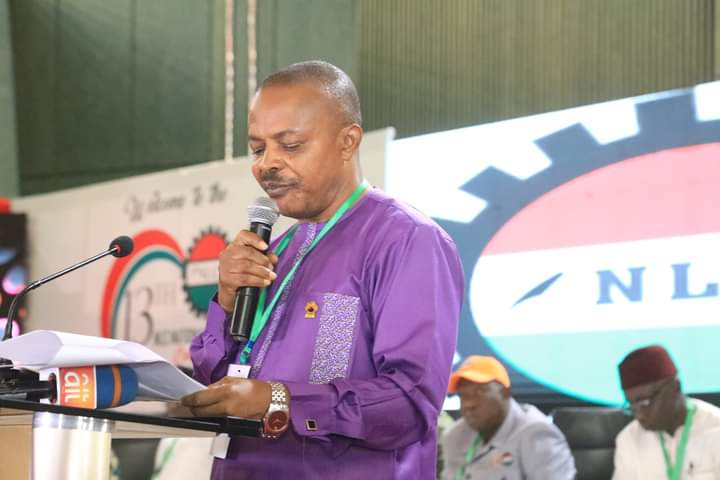
The Nigeria Labour Congress (NLC) has renewed pressure on the Federal Government to begin negotiations for a new national minimum wage, warning that rising living costs have continued to weaken the purchasing power of Nigerian workers.
The dispute centres on when negotiations should begin. While the government insists that the current ₦70,000 minimum wage is due for review on June 1, 2027, the labour union says preparations for a new agreement should start immediately to prevent delays.
In a letter dated October 13, 2026, NLC President Joe Ajaero urged the Minister of Labour and Employment, Muhammad Dingyadi, to initiate the negotiation process, including the nomination and inauguration of a tripartite committee involving government, organised labour and employers.
The union argues that beginning preparations now would give all parties sufficient time to negotiate a new wage agreement before the current arrangement expires.
Why the NLC Wants Negotiations to Begin Now
According to the NLC, the existing ₦70,000 minimum wage has lost much of its purchasing power because of inflation, rising transport fares and increasing prices of essential goods and services.
The union says workers are struggling to afford food, rent, healthcare, education and transportation despite the wage increase introduced in 2024.
The NLC maintains that it is not demanding the immediate implementation of a new minimum wage. Instead, it wants the government to begin the administrative and negotiation processes without further delay.
It has argued that postponing discussions could lead to further delays in reaching an agreement and implementing a revised wage.
FG Says Minimum Wage Review Is Due in 2027
The Federal Government has rejected the call for an early review, maintaining that the National Minimum Wage Act, as amended in 2024, provides for a three-year review cycle.
In its response, the government said the current ₦70,000 minimum wage became law on July 29, 2024, and would become due for review on June 1, 2027.
The Minister of Labour and Employment argued that beginning a fresh review barely two years into the current arrangement would be premature and inconsistent with the legal framework.
The government also pointed to measures such as the Presidential Compressed Natural Gas initiative, food-security programmes and other social interventions intended to ease economic pressure on households.
It said it remained committed to dialogue with labour and would convene the relevant tripartite committee at the appropriate time.
NLC Demands Petrol Price Cuts and Other Relief Measures
Beyond minimum wage negotiations, the NLC is demanding immediate measures to reduce the financial pressure on workers.
Its demands include a reduction in petrol prices to the levels prevailing when the current minimum wage was signed into law in 2024, implementation of previously agreed tax relief measures and payment of wage awards to cushion the rising cost of living.
The union has also called for the implementation of outstanding agreements involving the Joint Health Sector Unions (JOHESU) and the Joint Public Sector Negotiating Council.
According to the NLC, workers need immediate economic relief rather than assurances that negotiations will take place in the future.
The union has criticised the effectiveness of some government interventions, arguing that inadequate infrastructure and rising transport costs have limited the relief available to many workers.
Is a Nationwide Strike Imminent?
The disagreement has raised concerns about a possible escalation in industrial tension.
The NLC previously issued the Federal Government a 14-day ultimatum beginning October 9, demanding action on minimum wage negotiations and petrol prices. The union subsequently rejected the government’s response, describing it as insufficient to address workers’ concerns.
However, the latest reports do not establish that a nationwide strike has been formally declared.
Workers and members of the public will be watching for further announcements from the union and the government as the dispute develops.
What the Dispute Means for Nigerian Workers
The disagreement highlights the challenge of balancing the legal timetable for minimum wage reviews with workers’ concerns about the rising cost of living.
For employees earning the national minimum wage, the central question is whether their current earnings can adequately cover essential expenses. For the government and employers, any revised wage agreement would involve negotiations over implementation, affordability and compliance.
The outcome of discussions could affect millions of workers across Nigeria, although any new minimum wage would depend on the negotiation process and the applicable legal requirements.
For now, the NLC wants talks to begin immediately, while the Federal Government maintains that the next review is due in June 2027.
Utelnova will continue to monitor the dispute and report any confirmed decisions concerning wage negotiations, petrol prices or possible industrial action.
Discover more from UTELNOVA
Subscribe to get the latest posts sent to your email.

