
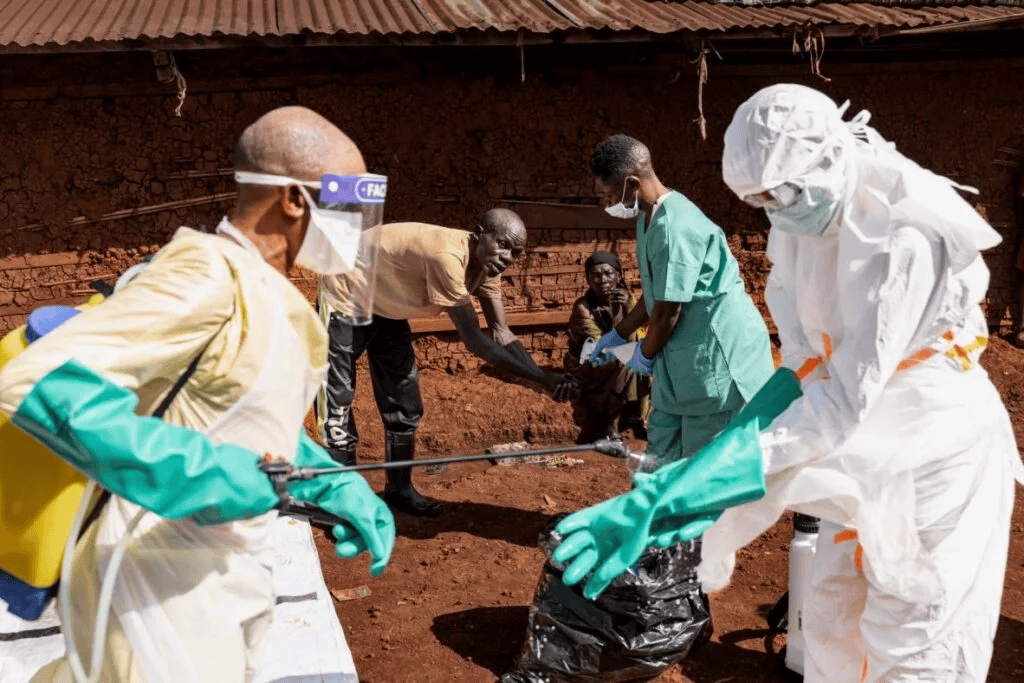
Nigeria has tightened its response to the latest Ebola case, placing 46 people identified as contacts of the infected patient under a 21-day air-travel restriction as authorities intensify efforts to prevent further transmission.
Nigeria’s Minister of Aviation and Aerospace Development, Festus Keyamo, directed the Nigeria Civil Aviation Authority (NCAA) to notify domestic and international airlines of the restriction.
According to reports published on October 22, the affected individuals comprise 44 people who came into contact with the patient at a hospital after she developed symptoms and two members of her domestic staff.
The directive is part of measures introduced by the Federal Government following confirmation of an imported case of Ebola virus disease in the Federal Capital Territory, Abuja.
Patient remains under medical care
The World Health Organization (WHO) confirmed on October 20 that laboratory tests had detected the Bundibugyo strain of Ebola in a woman with a recent travel history involving Uganda.
The patient developed symptoms on October 7 and sought medical attention at a private health facility in Abuja on October 11. She is being treated in isolation while health authorities investigate the source of the infection and trace possible contacts.
The WHO said investigations were continuing to establish the patient’s full travel and exposure history.
Airports placed on heightened alert
As part of the containment measures, Keyamo also directed the Federal Airports Authority of Nigeria (FAAN) to strengthen Ebola surveillance at international airports.
The measures include enhanced health screening, temperature checks, travel-history monitoring, digital health declarations and closer coordination between aviation authorities and public health agencies.
The Nigeria Centre for Disease Control and Prevention (NCDC) is working with the Federal Ministry of Health, WHO and other partners to coordinate contact tracing, infection prevention and response efforts.
The 21-day restriction is intended to prevent identified contacts from travelling by air during the monitoring period. Being placed on the list does not mean that the individuals have tested positive for Ebola.
What Nigerians should know about Ebola
Ebola is a serious viral disease that can spread through direct contact with the blood or other bodily fluids of an infected person who is showing symptoms, or through contaminated materials.
The incubation period can range from two to 21 days. Symptoms may include fever, weakness, headache, vomiting and diarrhoea, although these symptoms can also occur with other illnesses.
Anyone who suspects possible exposure should seek guidance from qualified health professionals and follow instructions from public health authorities. Nigerians should avoid spreading unverified claims or stigmatizing people who may have been exposed.
Nigeria previously contained an Ebola outbreak in 2014 through coordinated surveillance, isolation, contact tracing and public health interventions.
Authorities are now working to contain the latest imported case and prevent further transmission.
Utelnova will continue to follow official updates on Nigeria’s Ebola response as more verified information becomes available.
Sources: World Health Organization (WHO), Premium Times and Punch.
Discover more from UTELNOVA
Subscribe to get the latest posts sent to your email.

