
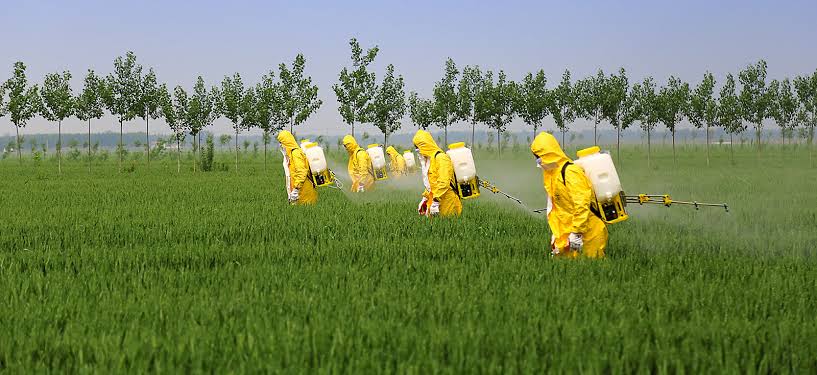
The food safety warning every Nigerian household should pay attention to
Nigerians have been urged to take food safety seriously following a fresh warning from the National Agency for Food and Drug Administration and Control (NAFDAC) over the continued circulation of banned and unregistered pesticides in the country.
The agency says illegal movement of agricultural chemicals across Nigeria’s borders and through unauthorised supply networks poses serious risks to public health, food safety and the environment.
According to a report published by Punch on Sunday, October 11, 2026, NAFDAC disclosed that it seized banned agrochemicals worth more than ₦800 million across Ogun, Ondo, Osun and Oyo states in 2025.
The disclosure has renewed concerns about the handling of agricultural chemicals and the possibility that prohibited products could enter the food production chain.
Banned Chemicals Still Under Investigation
NAFDAC identified paraquat, chlorpyrifos and atrazine among the pesticide ingredients affected by its restrictions. The agency said the applicable phase-out periods for the three substances ended between 2024 and January 2026.
Despite those restrictions, enforcement operations reportedly uncovered large quantities of prohibited products.
Between September 2024 and July 2026, operations in Nigeria’s North-West zone led to the interception or seizure of 2,974 cartons of paraquat-based pesticides valued at approximately ₦148.7 million.
The agency also reported recovering 120 cartons of chlorpyrifos-based pesticides valued at more than ₦17 million.
In a separate operation in Kebbi State, officials intercepted 5,619 cartons of paraquat-based products and 500 cartons of atrazine-based products.
NAFDAC said it was strengthening surveillance and working with security agencies to disrupt illegal importation, manufacturing and distribution networks.
Why This Matters to Nigerian Consumers
The concern goes beyond the sale of banned chemicals. Improper pesticide use can leave harmful residues on food crops, particularly when chemicals are applied incorrectly or produce is harvested before the recommended waiting period has elapsed.
NAFDAC has also raised concerns about pesticide residues detected above permitted safety limits in some samples of beans.
The agency warned that a pesticide approved for use on crops in the field is not automatically safe or authorised for preserving harvested food against storage pests.
This distinction is important because the misuse of agricultural chemicals may expose consumers to substances they were never intended to ingest.
However, the warning does not mean that all food sold in Nigerian markets is contaminated. It highlights the need for stronger enforcement, responsible farming practices and proper handling of agricultural chemicals.
What Farmers and Traders Should Do
NAFDAC has urged farmers and agro-input users to purchase pesticides only from licensed dealers and to use products that meet the country’s regulatory requirements.
Farmers are also advised to follow instructions on product labels, apply only recommended quantities, observe the required waiting period before harvesting and dispose of empty chemical containers safely.
Pesticides should never be stored alongside food, animal feed or household items. Empty chemical containers should not be reused for drinking water, cooking or other domestic purposes.
The agency has also disclosed that it trained more than 2,000 agro-input dealers nationwide to promote the use of genuine products and responsible pesticide management.
NAFDAC Intensifies Enforcement
The agency says it is working to prevent banned and unregistered pesticides from reaching the Nigerian market, seal unauthorised production facilities and take action against those involved in illegal activities.
For consumers, the latest warning is a reminder that food safety depends on the entire supply chain—from chemical manufacturers and importers to farmers, traders and retailers.
Nigerians who suspect that agricultural chemicals are being sold illegally should report their concerns through NAFDAC’s official reporting channels.
Utelnova takeaway: Protecting the food on Nigerian tables requires more than checking prices at the market. It also requires effective regulation, responsible pesticide use and greater public awareness of food safety.


Leave a Reply