
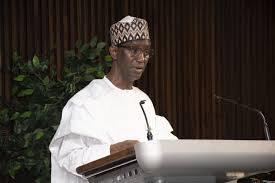
Nigeria’s National Security Adviser, Nuhu Ribadu, has warned that military operations alone cannot end banditry, calling for a broader strategy that combines intelligence-sharing, stronger border security and community participation.
Ribadu made the remarks at a security brainstorming session in Sokoto organised by the Sokoto Advancement Forum in collaboration with the Centre for Peace Studies at Usmanu Danfodiyo University.
He was represented at the meeting by Zakari Mijinyawa, Director of Legal Services in the Office of the National Security Adviser.
Ribadu Calls for a Broader Security Strategy
According to Ribadu, banditry has evolved beyond cattle rustling, highway robbery and kidnapping. Armed groups are increasingly exercising control over territories, imposing illegal taxes on rural communities and disrupting economic activities.
He said Sokoto’s proximity to Niger Republic and the wider Sahel region gives the security challenge a cross-border dimension, making cooperation between security agencies and neighbouring countries essential.
The NSA called for intelligence-led operations, effective border management and sustained efforts to stop the supply of illegal weapons and other resources used by criminal groups.
Communities and Young People in Focus
Ribadu also stressed the importance of building trust between communities and security agencies, noting that residents must feel confident that information they provide will be handled securely and acted upon.
He identified the protection of farming communities, rural livelihoods and early-warning systems as important elements of a lasting response to insecurity.
He further called for measures to address the conditions that make young people vulnerable to recruitment by criminal networks, alongside lawful rehabilitation programmes for eligible individuals willing to abandon violence.
However, he maintained that rehabilitation must not replace justice or become a reward for criminal activity.
Insecurity Continues to Affect Sokoto Communities
At the event, Sokoto Advancement Forum chairman, Professor Muhammad Ahmad Wali, said security incidents had been recorded in 21 of the state’s 23 local government areas.
He also reported that more than 1,100 people had been kidnapped in Sokoto during the 12 months leading up to June 2026, highlighting the continuing pressure on residents, businesses and rural communities.
The meeting called for improved intelligence gathering, stronger border controls, swift justice and better economic opportunities for young people.
For affected communities, the ultimate test of any security strategy will be whether residents can return home safely, children can attend school, farmers can work their land and markets can operate without fear.
Source: THISDAY and The Sun Nigeria, October 18, 2026.
Utelnova News Desk
Discover more from UTELNOVA
Subscribe to get the latest posts sent to your email.

